
‘We Have Enough AI’: Realism in a Time of Relentless Hype
Let’s ask a simple question that seems to be getting lost in all of the credulous fervor around AI: How’s this working out for everyone?

Let’s ask a simple question that seems to be getting lost in all of the credulous fervor around AI: How’s this working out for everyone?
There is a pervasive, grating narrative that AI research must only go forward. It must be a relentless pursuit of higher performance and increased capability. Frontier labs constantly produce new models with features and capabilities that they don’t really understand and behaviors they can’t predict and push them out into the world with a pat on the head and a vague hope that they won’t do too much damage.
Let’s ask a simple question that seems to be getting lost in all of the credulous fervor around AI: How’s that working out for everyone?
In any technological stampede, it’s easy to conflate "more" with "better." In many if not all areas, current compute power and model capabilities are already more than sufficient for our actual needs, so it’s hard to understand what the real value and utility might be of the bleeding edge model development that these labs are pushing so relentlessly. Based on the evidence we have so far, it’s hard to make a case that any of this is truly necessary, especially given the amount of money and other resources this research is consuming.
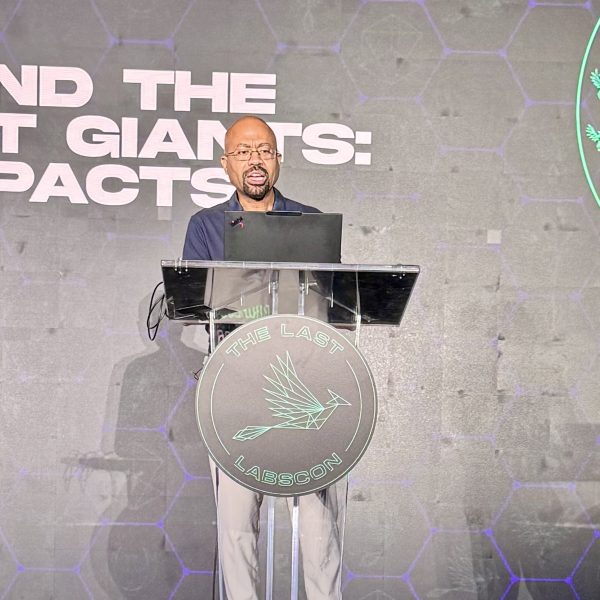
James Mickens, an authority on distributed systems, machine learning, and security and a professor at Harvard University, summed it up neatly in his keynote at the LabsCon conference last week.
“Is that spending worth it? My claim is no. In general the computers are already good enough. I know these are fighting words. We have so much compute power that some people want to create fake currencies and have our PCs solve math problems all day. Do you know how insane that is?” Mickens said.
“We have enough AI. I feel like the modern age forces us to be unpaid actors in ads for AI. This opacity is a problem because we already know these models lie and cheat.”
We are currently operating in a landscape where the advantages of AI are being disproportionately captured by the few to the detriment of the many. The obsession with scaling up models seems to ignore the law of diminishing returns and obscures some fundamental risks. A significant portion of the current AI deployment strategy relies on the hope that security can be added later, a flawed idea that we have seen fail spectacularly over and over for decades.
This has become even more obvious in the current era of AI-assisted vulnerability research that is regularly bringing us monthly updates from Microsoft and other vendors with hundreds of patches. Those numbers are impossible to handle for even the most capable and well-resourced security teams and are basically laughable for everyone else. Using AI to find bugs is cool, but is it make any of us safer? Software vulnerabilities are still pervasive and persistent and trying to patch our way out of this problem has not and will not work.
“You can’t bug bounty your way to being secure. Vulnerabilities remain dense. Is it going to stay this way forever? Maybe not,” Katie Moussouris, founder and CEO of Luta Security, and a pioneer in the bug bounty field, said during her talk at LabsCon.
“We haven’t reached the new vulnerability equilibrium. Who’s pulling which lever and how much advantage is it giving them? You can’t fight AI at human speeds so what are we going to do?”
First and foremost, we need to continue to invest in and encourage human creativity and ingenuity. When we blindly race toward automation, we risk creating a future where human expertise—our primary leverage—is systematically devalued. If you’ve read even one page of a Ray Bradbury or Neal Stephenson novel, you know that’s not what we want.
“What I worry about is that human pipeline. You all understand the tech and tradeoffs and what machines can and can’t do. Our expertise is what’s training all these models and it’s what we have as leverage, so we’re at this crossroad,” Moussouris said.
“We’ve got leverage now, our labor is still required and this is our time to strike. Yyou and your creativity are the real frontier. I hope you never pace yourself. Don’t slow down.”
The true threat of AI is not necessarily an existential killer machine scenario; the threat is that we will use these tools to dismantle the social and economic stability that allows us to function.
“AI is not going to kill us all. That is a human job,” said Dino Dai Zovi, SVP and head of security at Adyen.
Our focus right now should be on not finishing that job.